Cursor
редактор кода с ИИ на основе VS Code
Бесплатно
ИИ-агент, который работает внутри вашего репозитория, а не рядом с ним, — терминал, IDE, браузер, Slack и GitHub. Входит в Claude Pro за $20 в месяц; при плотной работе понадобится Max за $100 и выше.
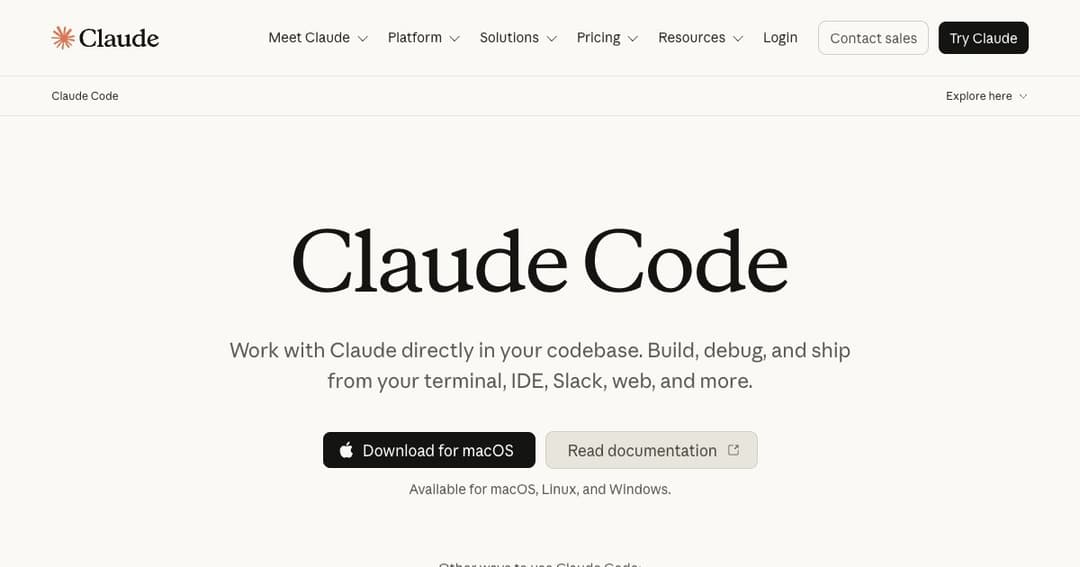
Claude Code — агент для программирования от Anthropic: вы описываете результат, он читает репозиторий, правит файлы, запускает команды, проверяет результат и отчитывается. Единица работы здесь — изменение в проекте, а не подсказка в буфере, и в этом отличии весь продукт.
Он начинался как инструмент для терминала и остался ему на удивление верен. Не нужно переезжать в новый редактор и перестраивать процесс — он подключается к той папке, в которой вы и так находитесь. Со временем появились десктопное приложение для macOS, Linux и Windows, расширения для VS Code и JetBrains, версия в браузере, мобильные приложения, интеграция с GitHub для пул-реквестов и присутствие в Slack, откуда можно раздавать задачи прямо из переписки.
Важнее поверхностей сама модель работы. Вы не дополняете код — вы делегируете, а потом проверяете. Подходит ли это вам, зависит скорее от готовности читать диффы, чем от чего-либо в списке функций.
Получив задачу, агент сам ищет по кодовой базе, а не ждёт, пока вы вставите контекст. Он идёт по импортам, читает соседние файлы и составляет представление об изменении до того, как что-то тронет. В незнакомом репозитории именно это экономит настоящее время: понять, каких двенадцати файлов касается правка, — сложная половина работы.
Он ещё и запускает вещи. Тесты, сборку, линтеры, команды git, установку пакетов. Когда тест падает, он читает причину и пробует снова, и вот этот цикл отличает агента от очень хорошего автодополнения.
Файл CLAUDE.md в корне репозитория читается в начале каждой сессии — соглашения, команды, заметки об архитектуре, всё то, что иначе пришлось бы еженедельно повторять новому коллеге. Это самая полезная настройка из всех возможных, и именно её отсутствие объясняет, почему одним командам инструмент кажется общим местом, а другим — точно подогнанным под их код.
Дальше идут скиллы для упакованных процедур, хуки, перехватывающие действия, свои слэш-команды, субагенты для параллельной работы и MCP-серверы, соединяющие агента с базами, трекерами задач и внутренней документацией. Это очень много поверхности для настройки. В первый день не нужно ничего из этого, а к третьему месяцу — примерно половина.
Агент предлагает изменения, вы их одобряете. Режимы разрешений задают, что ему можно без надзора, и разумное умолчание — спрашивать перед всем необратимым. Ничто из этого не отменяет необходимости читать написанное: работа смещается с набора текста на проверку, и команды, пропускающие вторую половину, получают ровно тот результат, которого следовало ждать.
| Тариф | Цена | Кому подходит |
|---|---|---|
| Free | — | Claude Code в бесплатный тариф не входит |
| Pro | $20/мес или $17/мес при оплате за год | Короткие сессии в небольших проектах |
| Max 5× | $100/мес | Ежедневная работа в крупных репозиториях |
| Max 20× | $200/мес | Агенты, работающие большую часть дня |
| Team standard | $25 за место в месяц или $20 при оплате за год | Общий счёт, SSO, админские настройки |
| Team premium | $125 за место в месяц или $100 при оплате за год | Впятеро больший лимит, чем у обычного места |
| Enterprise | Цена за место плюс потребление по тарифам API | Контроль расходов, SCIM, журналы аудита, комплаенс |
У этого прайса есть особенность, которую стоит назвать: вы покупаете подписку на Claude, в которую входит Claude Code, а не лицензию на инструмент разработчика. Тот же тариф покрывает чат и всё остальное из набора — выгодно, если вы этим пользуетесь, и слегка странно с точки зрения учёта, если вы открываете только терминал.
Какой тариф нужен, решают лимиты потребления, а не функции. Pro честно хватает на короткие сессии в небольшом проекте; продолжительная работа агента в большой кодовой базе его исчерпает. На Max в итоге оказывается большинство тех, кто занимается этим ежедневно. Есть ещё оплата по факту через API — она удобна для автоматизации и CI, но при интерактивной работе обычно выходит дороже подписки.
Выигрыш растёт вместе с тем, сколько вы не удерживаете в голове. Приход в новый проект, работа поперёк границ сервисов, отслеживание бага в коде, который никто не трогал два года, — готовность агента прочитать всё стоит дороже его готовности писать.
Обновления фреймворков, переименования в API, перевод сотен файлов на новый шаблон. Механически, нудно и хорошо описано — та форма работы, где агент окупает месяц подписки за один день и где дифф реально поддаётся проверке.
Поскольку соглашения лежат файлом в репозитории, они действуют для всех и путешествуют вместе с кодом. Для команд, годами споривших о стиле, следование агента записанному стандарту — побочная польза, которая иногда переживает сам инструмент.
Он умеет работать без интерфейса, поэтому встраивается в скрипты, расписания и CI. Аудит зависимостей, заметки к релизу, разбор падающих тестов — работа, ради которой не жалко было потратить вечер человека, но не жалко запустить по расписанию.
Нет. Он входит в Claude Pro за $20 в месяц или $17 в месяц при оплате за год вперёд, а также в тарифы Max, Team и Enterprise. В бесплатный тариф Claude он не входит.
Нет. Есть десктопные приложения для macOS, Linux и Windows, расширения для VS Code и JetBrains, версия в браузере, мобильные приложения, интеграция с GitHub и интеграция со Slack. Терминал — исходная поверхность, а не единственная.
Copilot — расширение внутри вашего редактора, Cursor — редактор, на который вы переходите. Claude Code не то и не другое: он подключается к проекту, а не к среде редактирования, поэтому одинаково работает в терминале, в CI и из Slack. Если хочется ИИ в интерфейсе редактора, те двое подойдут лучше; если нужно выполнение задач по всему репозиторию — этот.
Начинайте с Pro. Если регулярно упираетесь в лимиты — а при длинных сессиях агента в большой кодовой базе это происходит быстро, — переходите на Max. Шаг с Max 5× на 20× покупает запас, а не новые возможности.
Код отправляется на серверы Anthropic для обработки. В бизнес-тарифах заявлено, что содержимое клиентов по умолчанию не используется для обучения моделей, а Enterprise добавляет контроль хранения и журналы аудита. Если вы работаете под обязательствами о конфиденциальности, читайте действующие условия, а не пересказ.
Да — поддерживаются запуски без интерфейса, задачи по расписанию и конвейеры CI, а режимы разрешений задают, что ему можно без надзора. Давайте узкую задачу и способ самому проверить результат; страшные истории рождаются там, где агент оставлен без присмотра с расплывчатой инструкцией.
Claude Code — самое чистое выражение агентской модели программирования с ИИ: не умное автодополнение, а исполнитель, которому вы отдаёте задачу. В большой кодовой базе, на миграции или на работе, которую вы понимаете, но не хотите набирать руками, он меняет форму рабочего дня. В маленьких и знакомых проектах выигрыш реален, но скромнее, и чтобы это выяснить, хватит Pro.
Издержки здесь честные. Бесплатного тарифа нет, лимиты кусаются раньше, чем ожидаешь, а бремя проверки теперь лежит на вас так, как раньше не лежало. Запишите соглашения в репозиторий, читайте каждый дифф и держите задачи достаточно узкими, чтобы вы сами видели, когда ответ неверен.