Continual
платформа ИИ-агентов для автоматизации рабочих процессов
Соединительная ткань между приложениями, которые у бизнеса уже есть, плюс агенты, таблицы, формы и слой MCP для ИИ-ассистентов. Бесплатный тариф — демонстрация; настоящая работа начинается примерно с $20 в месяц.
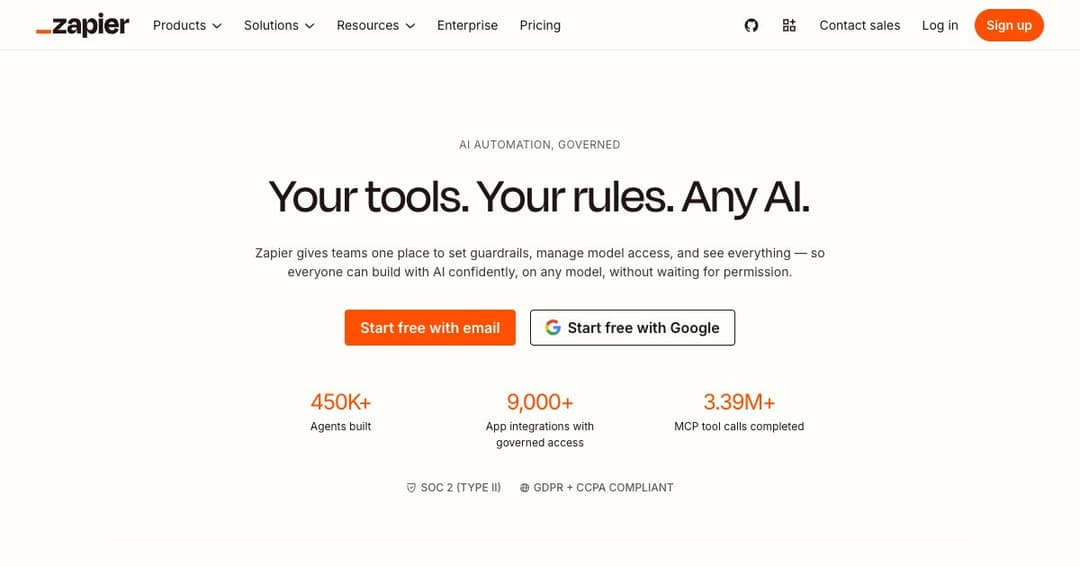
Zapier связывает программы, которыми бизнес уже пользуется, так, чтобы событие в одном приложении вызывало действие в другом. Отправлена форма — появилась строка в таблице, пришло сообщение в Slack, создался черновик счёта, и никто ничего не переносил руками.
Он занимается этим задолго до нынешней волны ИИ, и его преимущество невзрачное и очень трудно повторимое: он умеет разговаривать более чем с девятью тысячами приложений, включая ту малоизвестную штуку, с которой ваша бухгалтерия отказывается расставаться. У конкурентов бывает удобнее редактор и ниже цены. Списка интеграций почти ни у кого нет.
Компания теперь описывает себя через оркестрацию ИИ, а не через автоматизацию, и это не только маркетинг. На платформе появились агенты, чат-боты, собственная база данных и формы, а также слой, позволяющий внешним ИИ-ассистентам совершать действия в ваших подключённых приложениях. Но фундамент прежний: триггер, несколько шагов и девять тысяч мест, куда их можно направить.
Триггер и последовательность действий, собранные в визуальном редакторе без кода. Добавьте ветвления, фильтры, задержки и форматирование — и большая часть автоматизации бизнес-процессов закрыта. Версия из двух шагов действительно проста; всё серьёзное требует нескольких шагов, а это уже платная функция.
Если Zap идёт по нарисованному вами пути, то агент решает сам. Вы даёте ему инструкции, доступ к данным компании и набор приложений, а он определяет, какие действия предпринять, — по триггеру, по расписанию или по вашей просьбе. Это по-настоящему новая часть продукта, и именно она сильнее всего нуждается в присмотре, прежде чем вы подпустите её к чему-нибудь отправляющему письма.
Место, где хранить данные, место, где их собирать, и место, где надеть на всё это простой интерфейс. Ни одно из этого не выиграет у специализированного инструмента, но их наличие прямо внутри платформы убирает самую частую причину, по которой маленький сценарий превращается в проект: нужна база данных, а положить её негде.
Слой MCP позволяет внешнему ИИ-ассистенту — тому, которым вы и так пользуетесь — совершать реальные действия в ваших подключённых приложениях. SDK делает то же для кода. Вместе они тихо переводят Zapier в роль слоя действий, к которому обращаются другие ИИ-продукты, а не места, куда вы приходите собирать сценарии, — и, возможно, именно эта роль окажется самой долговечной.
На индивидуальных тарифах Zapier берёт деньги не за сценарии и не за пользователей. Он берёт за задачи — и задача здесь не равна «один запуск автоматизации». Каждый шаг в Zap и каждый вызов внешнего коннектора расходует задачи, причём по разной ставке: более мощная модель ИИ, более длинный кусок кода или определённый тип коннектора стоят дороже простого обновления поля.
Всё черпает из одного общего пула. Zap-сценарии, шаги с ИИ, код, вызовы MCP и SDK тратят одну и ту же квоту, отдельных бюджетов по продуктам нет. Это проще прежней схемы, но означает и то, что эксперимент с ИИ-шагом способен незаметно съесть месячный лимит вашего сценария выставления счетов.
Практическое следствие: заявленная цена — это нижняя граница, а не цена. Тарифы начинаются с малого объёма задач и растут по мере его увеличения, так что цифра со страницы тарифов относится к бизнесу, который делает совсем немного. Прикиньте свой месячный объём — именно шагов, а не сценариев, — прежде чем сравнивать стоимость с чем-либо ещё.
| Тариф | Цена | Что открывает |
|---|---|---|
| Free | $0 | 100 задач в месяц, только двухшаговые Zap, безлимит сценариев, таблиц и форм |
| Professional | от $29,99/мес или $19,99 при оплате за год | Многошаговые Zap, премиальные приложения, вебхуки, поля с ИИ, поддержка по почте и в чате |
| Team | от $103,50/мес или $69 при оплате за год | 25 пользователей, общие сценарии и подключения, SAML SSO, приоритетная поддержка |
| Enterprise | По запросу | Безлимит пользователей, админские права, годовые лимиты задач, наблюдаемость, персональный менеджер |
Годовая оплата экономит около трети. Агенты и чат-боты продаются как дополнения, а не входят в тариф. Каждая цена выше — это точка входа в свой тариф, и она растёт вместе с выбранным объёмом задач.
Считайте бесплатный тариф демонстрацией, а не тарифом. Сто задач — это несколько дней работы одного скромного сценария, а ограничение в два шага исключает всё, где есть фильтр или условие, то есть почти всё, что стоит автоматизировать.
Основная аудитория и причина, по которой компания существует. Если альтернатива Zapier — человек, каждое утро переносящий данные между двумя системами, подписка окупается за первые две недели и продолжает окупаться.
Распределение лидов, обогащение данных, передача между инструментами продаж, уведомления, доходящие до нужного человека. Такая работа слишком специфична для готовых программ и слишком мелка, чтобы оправдать время разработчиков, — а это ровно тот зазор, который Zapier и закрывает.
Количество интеграций — вот аргумент. Когда в вашем наборе есть инструмент, который больше никто не поддерживает, Zapier часто оказывается единственным вариантом, и это решает вопрос покупки чаще, чем любое сравнение функций.
Если вы уже работаете с ИИ-ассистентом и хотите, чтобы он действительно что-то делал — обновил запись, отправил документ, завёл тикет, — слой MCP это кратчайший путь от разговора к действию по всему набору инструментов, который у вас уже есть.
Есть бесплатный тариф со ста задачами в месяц и двухшаговыми сценариями. Его достаточно, чтобы понять продукт, и недостаточно, чтобы вести на нём бизнес. Многошаговые сценарии начинаются на платных тарифах.
Каждый шаг в Zap и каждый вызов внешнего коннектора. Ставки различаются: более тяжёлые модели ИИ, долгое выполнение кода и отдельные типы коннекторов расходуют больше. Zap-сценарии, шаги с ИИ, код, MCP и SDK черпают из одного общего месячного пула.
Более чем с девятью тысячами. Именно эта широта — главная причина выбрать Zapier вместо более дешёвого конкурента, особенно если в вашем наборе есть что-то нестандартное.
Zap идёт ровно по тому пути, который вы построили. Агенту дают цель, контекст и набор приложений, а он решает, что делать. Zap предсказуем; агент гибок и требует большего присмотра.
Make обычно дешевле в пересчёте на операцию и нагляднее в редакторе. n8n можно поставить на свой сервер, что полностью меняет кривую расходов на объёме и оставляет данные на вашей инфраструктуре. Zapier выигрывает охватом интеграций, надёжностью и тем, как быстро нетехнический человек получает работающий результат.
Да, для этого и нужен слой MCP. Он открывает внешнему ИИ-ассистенту действия в ваших подключённых приложениях, чтобы тот мог делать, а не только описывать. Такие вызовы расходуют задачи, как и всё остальное.
Zapier — инфраструктура, которую большинство компаний перестаёт замечать, как только она заработала, а это высшая похвала для программ автоматизации. Список интеграций остаётся сильнейшим аргументом в категории, а новые слои с агентами и MCP дают ему правдоподобную роль в мире, где ИИ-ассистентам нужно место, чтобы действовать.
Заходите с оценкой своего месячного объёма задач, а не с заявленной ценой, и начинайте с предсказуемых Zap, прежде чем передавать что-то агенту. Если у вас большой объём автоматизации и есть силы разработки, сначала посчитайте вариант на своём сервере — с масштабом разрыв растёт.