Charley
Asistente de redacción de ensayos para estudiantes
Gratis
Le das un objetivo e investiga, construye y entrega: diapositivas, sitios web, análisis, juegos, mientras tú haces otra cosa. Basado en créditos desde 20 $ al mes, y con un cambio societario que conviene conocer.
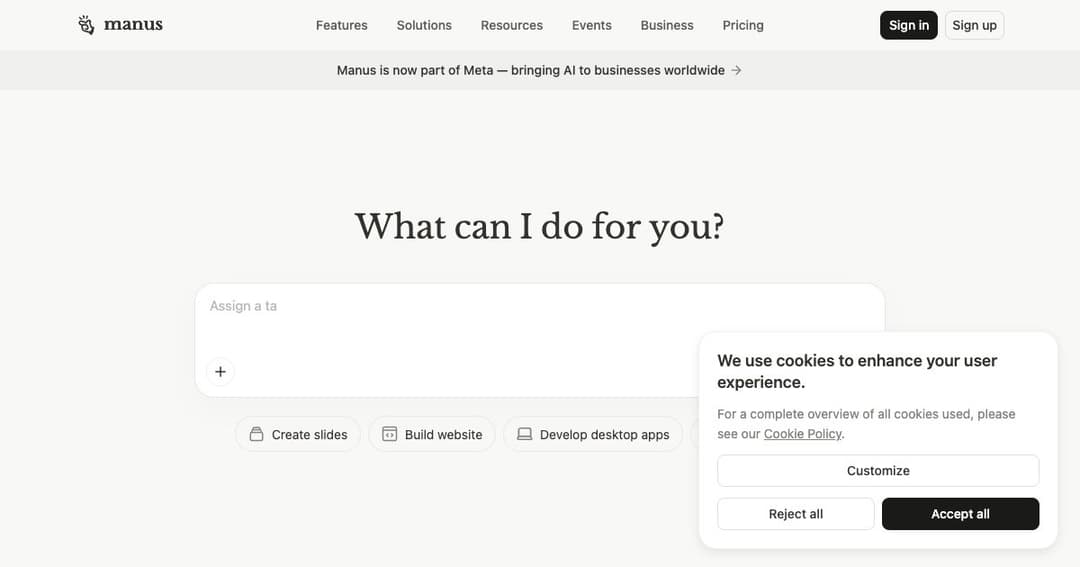
Manus muestra ahora mismo un aviso en su propio sitio indicando que volverá pronto a operar como empresa independiente y que puede requerirse alguna acción en tu cuenta. Si ya lo usas, entra y comprueba qué te están pidiendo antes de que nada más de esta página importe.
Una reestructuración societaria no suele ser material de catálogo, pero un mensaje que pide acciones a los usuarios actuales sí lo es. Léelo en tu propia cuenta y no en un artículo, y exporta todo lo que lamentarías perder.
Manus es un agente de IA de propósito general. Le das un objetivo en lugar de una instrucción — investiga este mercado, monta un sitio para este producto, analiza estas cifras y hazme una presentación — y se va y lo hace entero, planificando sus propios pasos y usando por el camino un navegador, una terminal y archivos.
La diferencia con un asistente de chat no es sutil. Un chatbot responde y espera. Un agente trabaja mientras tú cierras la pestaña y vuelve con un entregable: unas diapositivas terminadas, un sitio desplegado, un informe con fuentes. La unidad de interacción es una tarea completada y no un mensaje respondido.
Eso resultaba asombroso cuando salió y hoy es la forma de toda una categoría. Manus sigue siendo uno de los agentes generales más capaces y ha crecido hasta ser un conjunto: diseño, diapositivas, generación de imagen y música, un operador de navegador, integración con Slack y una API.
No un resumen de los diez primeros resultados de búsqueda. Lee fuentes, sigue pistas, contrasta y devuelve algo estructurado con su trabajo a la vista. Para análisis competitivo, estudios de mercado y diligencia debida, la diferencia entre esto y una respuesta de chat se mide en horas.
La función de escalado: en lugar de un agente trabajando en secuencia, la tarea se reparte entre muchos que corren en paralelo. Es lo que convierte «mira los doscientos» en una instrucción realista en vez de en un trabajo de toda la noche, y se tarifica en consecuencia.
Diapositivas que puedes presentar, sitios web realmente desplegados, hojas de cálculo con el análisis ya hecho, pequeños juegos y páginas interactivas. La salida es un archivo o una URL y no un bloque de texto que después tienes que convertir en algo.
Un operador de navegador le permite hacer clic por las interfaces igual que una persona, y el nivel superior incluye una máquina en la nube propia. Eso es lo que le deja llegar a sistemas que no tienen API, que son la mayoría.
| Plan | Precio | Créditos | Para qué sirve |
|---|---|---|---|
| Standard | 20 $/mes | 4000 al mes, más 300 que se renuevan a diario | Investigación cotidiana, sitios y diapositivas estándar |
| Customizable | 40 $/mes | 8000 al mes, más 300 diarios | Consumo definido por ti para cargas cambiantes |
| Extended | 200 $/mes | 40 000 al mes, más 300 diarios | Tareas a gran escala, producción por lotes, máquina en la nube propia |
| Team | Bajo consulta | Compartidos entre puestos | Créditos comunes, SSO, controles de acceso, analítica de uso |
El pago anual ahorra alrededor de un diecisiete por ciento. Todos los niveles de pago incluyen veinte tareas simultáneas y veinte programadas, algo inusualmente generoso: los planes se diferencian por cuánto trabajo puedes hacer, no por cuántas cosas puedes lanzar a la vez.
La página de precios publicada enumera estos niveles de pago y no muestra un plan gratuito. Crear una cuenta no cuesta nada, pero no planifiques contando con una asignación gratuita que no hayas confirmado para tu propia cuenta.
Lo que lo decide todo es el consumo de créditos, y predecirlo es genuinamente difícil. Una pregunta corta cuesta poco; un agente que pasa cuarenta minutos navegando, reintentando y reconstruyendo cuesta muchísimo. La distancia entre el nivel de veinte dólares y el de doscientos es de diez veces en créditos, y quien agota el plan más barato en una semana no está haciendo nada raro: está usando el agente como se pretende.
El caso más claro. El trabajo que de verdad consume tiempo pero no es conceptualmente difícil — reunir, comparar, tabular, citar — es exactamente lo que un agente hace bien y exactamente lo que le cuesta un día a una persona.
Una presentación con investigación real detrás, producida de un día para otro. El valor no es que el resultado sea definitivo — rara vez lo es — sino que el primer ochenta por ciento llega antes de la reunión y no después.
Una página de aterrizaje, un análisis de datos, unas diapositivas, cuando no hay diseñador, ni analista, ni desarrollador. No igualará a un profesional, y para una empresa de cuatro personas esa no es la comparación que se está haciendo.
Wide Research junto con las tareas programadas convierte «revisa estas doscientas cosas cada lunes» en algo que ocurre sin que nadie se acuerde de hacerlo.
Los planes publicados empiezan en veinte dólares al mes. Crear una cuenta no cuesta nada, pero en la página de precios no figura ningún nivel de uso gratuito: confirma qué incluye tu propia cuenta en vez de suponerlo.
En el trabajo que hace el agente: navegar, razonar, generar, reintentar. Las tareas autónomas largas consumen mucho más que las preguntas cortas, y los intentos fallidos también cuestan. Presupuesta por complejidad de la tarea y no por número de peticiones.
Esos te responden; Manus va y hace la tarea. Los asistentes generales han desarrollado desde entonces sus propios modos agénticos, así que la distancia es menor que antes, pero Manus sigue construido en torno a terminar trabajo sin supervisión y no en torno a la conversación.
Informes de investigación con fuentes, presentaciones, sitios web desplegados, análisis de datos, imágenes, música, pequeños juegos y páginas interactivas. La salida es un entregable y no la descripción de uno.
Veinte simultáneas y veinte programadas en todos los niveles de pago. Los planes se diferencian por la asignación de créditos y no por la concurrencia, un diseño más sensato que el de la mayoría.
Sí, con créditos compartidos entre puestos, inicio de sesión único, controles de acceso y analítica de uso. Compartir importa aquí más de lo habitual, porque el consumo individual de créditos varía muchísimo.
Manus fue el producto que hizo que los agentes autónomos parecieran reales y no una promesa, y sigue haciendo bien lo suyo: dale un trabajo de varios pasos genuinamente tedioso y recibirás un artefacto terminado. Para investigación, análisis y primeras versiones de cosas que si no llevarían un día, amortiza la suscripción rápido.
Dos cautelas antes de comprometerte. Los créditos se esfuman más rápido de lo que sugiere la intuición, así que empieza en el plan de entrada y observa lo que cuesta una tarea real. Y hay un aviso activo sobre la estructura de la empresa pidiendo a los usuarios que actúen: ocúpate de eso primero y guarda copias de todo lo importante.