Bland AI
корпоративные голосовые агенты на своём стеке
API
Голосовые агенты без кода с собственной телефонией и 200+ интеграциями. В 2026 году компания убрала самостоятельные тарифы: контракты начинаются примерно с $30 000 в год.
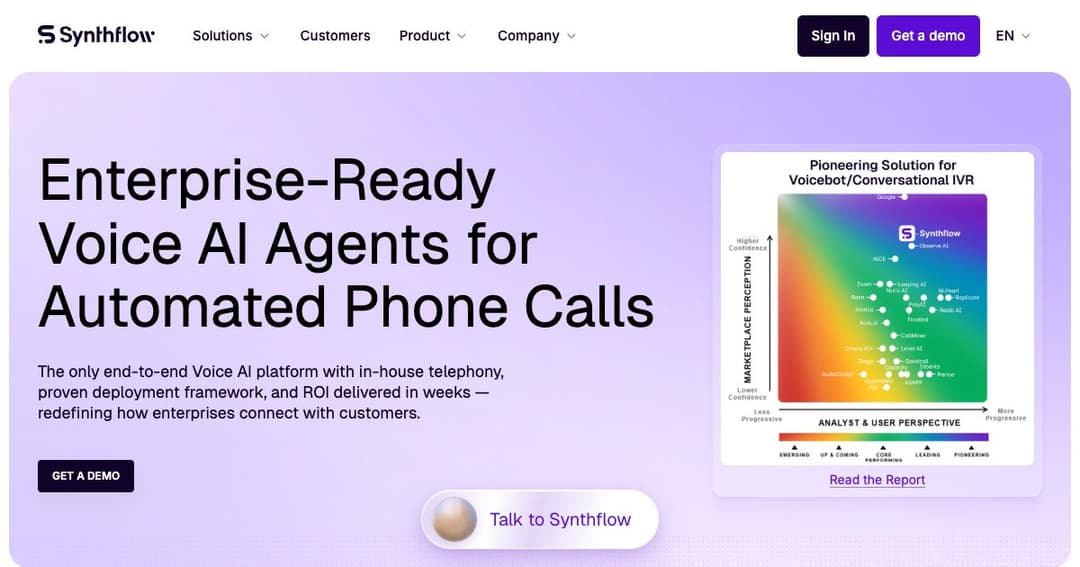
Synthflow — платформа для сборки голосовых агентов, которые принимают и совершают телефонные звонки, без единой строчки кода. Разговор собирается в визуальном конструкторе сценариев, подключается к системам, к которым звонок должен обращаться, и выводится на телефонную линию — вам не нужно ни программировать, ни самостоятельно собирать стек моделей.
Прежде чем читать любой обзор постарше, важно понимать: Synthflow больше не тот продукт, который в этих обзорах описан. Он запускался как доступный инструмент с подпиской примерно от $29 в месяц, собрал аудиторию агентств и малого бизнеса, а в 2026 году эти тарифы убрал. Публичная страница цен теперь показывает единственное корпоративное предложение, контракты по которому, судя по сообщениям, начинаются около $30 000 в год. Каталоги и сравнительные статьи по всему интернету за этим не успели, и очень многие до сих пор называют тарифы, которые уже нельзя купить.
Это важнее обычного изменения цен, потому что меняется сам адресат продукта. Сегодня Synthflow продаётся среднему и крупному бизнесу с финансированием — в здравоохранении, финансах, ритейле, телекоме и на аутсорсинговых контакт-центрах. Если вы небольшое агентство и ищете платформу, которую советовали в 2025-м, этой платформы больше нет: софт по-прежнему хороший, но цена уже не для вас.
Разговор собирается в конструкторе сценариев, где каждый шаг — это узел: задать вопрос, разветвиться по ответу, обратиться к системе, передать дальше. Агент может состоять из специализированных подпотоков, а не из одного монолитного скрипта, поэтому агент-администратор передаёт звонящего в подпоток записи, и ни одна из половин не знает, как устроена другая.
Замысел в том, чтобы менять реплики агента во вторник днём мог руководитель операционного отдела, понимающий сам звонок, а не инженер, понимающий API. В поддержке это реальное преимущество: человек, знающий правильный ответ, почти никогда не имеет доступа к репозиторию.
Synthflow держит собственный телефонный слой, а не перепродаёт чужой, и заявляет для него задержку меньше 100 миллисекунд при доступности 99,99%. Читайте эту цифру внимательно: она описывает телефонное плечо, а не время между тем, как звонящий договорил, и тем, как агент начал отвечать. В общее время ответа входят ещё распознавание речи, рассуждение и синтез, и ни одна платформа не отвечает за десятую долю секунды.
Практическая польза — в вариантах размещения по регионам и поддержке собственного оператора связи. И то и другое важно организациям с требованиями к хранению данных внутри страны или с действующими контрактами со связистами, от которых нельзя просто уйти.
Компания заявляет более 200 интеграций, и список показателен: рядом с ожидаемыми HubSpot, Salesforce, Zapier и Cal.com стоят Genesys, RingCentral и Avaya. Последние три — платформы контакт-центров, а не стартаперские инструменты, и их присутствие точно говорит, в какие здания Synthflow рассчитывает попасть.
Агентов можно полностью выпускать под чужим брендом — на этом и строился партнёрский и агентский бизнес, из которого выросла платформа. Эта возможность пережила смену цен; изменился лишь размер партнёра, которому она теперь подходит.
Есть наблюдение за звонками в реальном времени, автоматический контроль качества, который оценивает разговоры без супервизора, слушающего каждый, песочница для проверки изменений до выката и дообучение на ваших собственных звонках. Из опубликованных цифр по клиентам: 65 миллионов обработанных звонков, рост доли отвеченных вызовов на 35% и партнёрство с Freshworks, где автоматизировали 65% рутинных обращений. Это цифры вендора из кейсов вендора, и читать их стоит как направление, а не как измерение.
Опубликованного прайс-листа больше нет. Есть корпоративное соглашение, рассчитанное под ваш проект, с точкой входа, которую в публикациях оценивают примерно в $30 000 в год.
| Что | Как обстоит дело в 2026 году |
|---|---|
| Самостоятельные тарифы ($29–$449 в месяц) | Убраны в течение 2026 года |
| Бесплатный пробный период | Публично больше не предлагается |
| Корпоративный контракт | Индивидуальный, по сообщениям — от $30 000 в год |
| От чего зависит цена | Объём звонков, одновременность, настройка телефонии, интеграции, проверка безопасности, поддержка при запуске |
| Что входит в соглашение | Внедрение, онбординг, тестирование, обучение, поддержка при запуске |
| Условия договора | SLA, рамочный договор и соглашение об обработке данных, корпоративная проверка безопасности |
| Типичный срок внедрения | Заявлено: 60 дней или меньше |
Некоторые сторонние обзоры до сих пор описывают модульный тариф с оплатой по факту рядом с корпоративным. На странице цен его нет, поэтому считайте его существование вопросом к отделу продаж, а не фактом, на который можно рассчитывать.
Для ориентира: $30 000 в год — это примерно 250 000 минут по десяти центам за минуту, как у платформ с поминутной оплатой. Если ваш объём сильно меньше, эта цена покупает не минуты, а внедрение, SLA и человека, который отвечает, когда линия замолчала.
Интеграции с Genesys, Avaya и RingCentral существуют для организаций, которые не меняют контакт-центр целиком, а убирают из него только те части, где звонящий слушает меню. Для продукта в его нынешнем виде это самое очевидное попадание.
Там, где владельцы клиентского разговора должны менять его сами, визуальный конструктор ценнее изящного API. Synthflow — одна из немногих платформ этого сегмента, где для повседневных правок разработчик действительно не нужен.
Белая метка плюс многоагентная архитектура по-прежнему позволяют продавать голосовых агентов под своим брендом — теперь на масштабе, где пятизначное годовое обязательство перед платформой является строкой бюджета, а не препятствием.
Размещение по регионам, собственный оператор связи и многоязычные звонки подходят бизнесу, который держит одну службу поддержки на несколько стран и для которого хранение данных внутри юрисдикции — требование регулятора, а не пожелание.
Публично — нет. Бесплатный и дешёвые тарифы, благодаря которым платформа стала популярной у небольших агентств, убрали в течение 2026 года, и оценка теперь идёт через отдел продаж.
Цена индивидуальная, публикации оценивают точку входа примерно в $30 000 в год. Итоговая сумма зависит от объёма звонков, одновременности, телефонии, интеграций, требований безопасности и объёма поддержки при запуске.
Его убрали вместе со всей линейкой самостоятельных тарифов, когда компания ушла в верхний сегмент. Сторонние каталоги, где он до сих пор показан, просто устарели, а не раскрывают скрытую возможность.
Реальные альтернативы — платформы с поминутной оплатой. Retell AI даёт $10 кредитов и не берёт абонентскую плату, у Bland AI есть бесплатный тариф с оплатой $0,14 за минуту, а Vapi берёт $0,05 за минуту за оркестрацию, если вы готовы выбирать модели сами.
Для сборки и правки разговоров — нет, в этом и смысл конструктора сценариев. Техническая помощь понадобится на первичной интеграции и везде, где дело касается ваших собственных систем и проверки безопасности.
Да. Поддерживается собственная телефония, SIP-транки и подключение своего оператора, а также интеграции с Genesys, RingCentral, Avaya и другими платформами контакт-центров.
Synthflow — крепкая голосовая платформа без кода, которая решила, что её будущее в корпоративных контакт-центрах, а не в самостоятельных подписках. Конструктором действительно пользуются не-инженеры, список интеграций дотягивается до систем, на которых реально работают большие службы поддержки, а собственная телефония даёт варианты по хранению данных и надёжности, которых у перепродавцов нет.
Попадёт ли она в ваш короткий список — теперь почти целиком вопрос размера. Если вы покупаете голосовую программу с планом внедрения и SLA, это серьёзный кандидат. Если вы надеялись попробовать что-то на этой неделе за пару сотен долларов, смотрите на платформы с поминутной оплатой — и не верьте сравнительным статьям, которые до сих пор пишут, что Synthflow стоит от $29 в месяц.